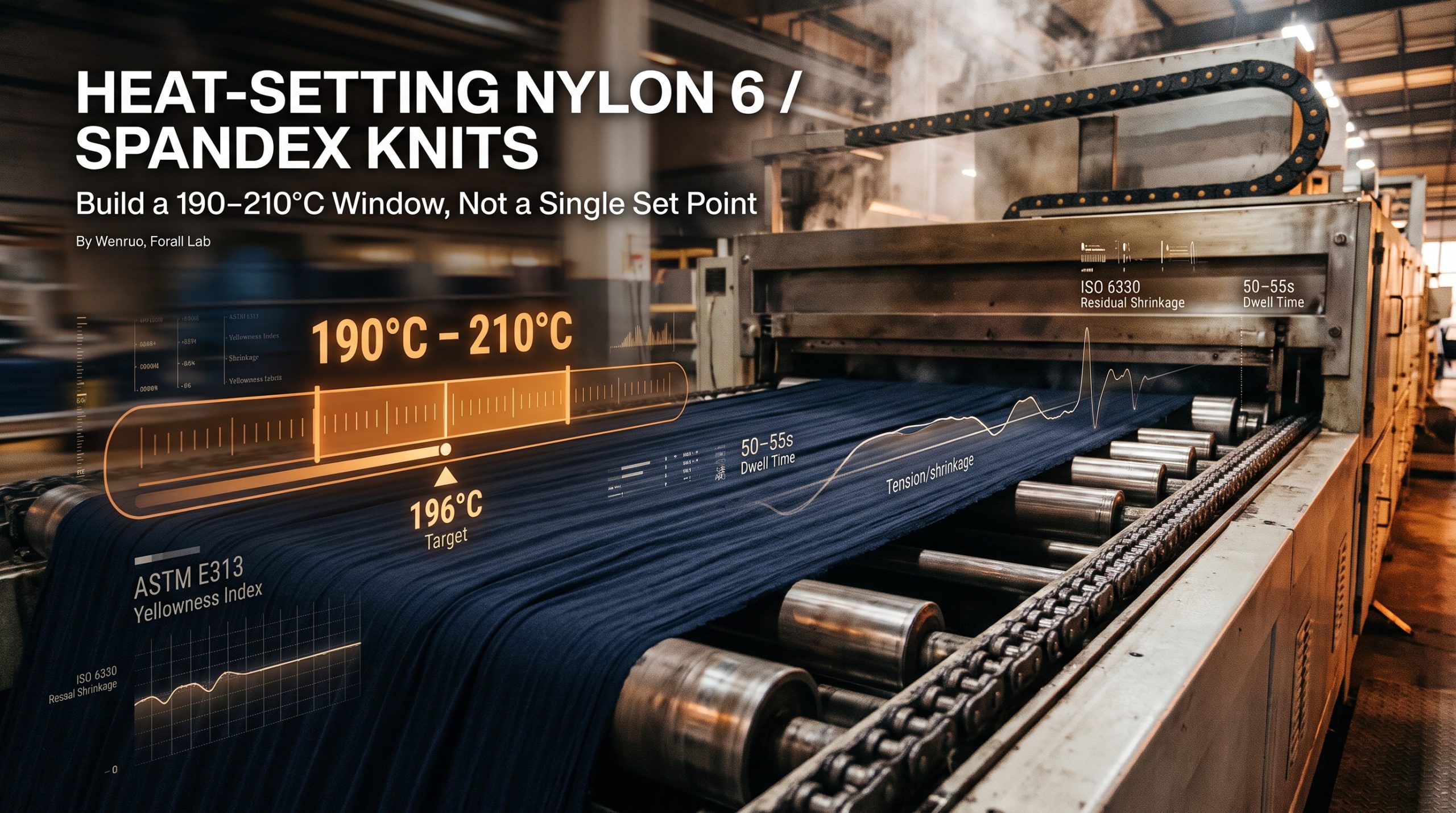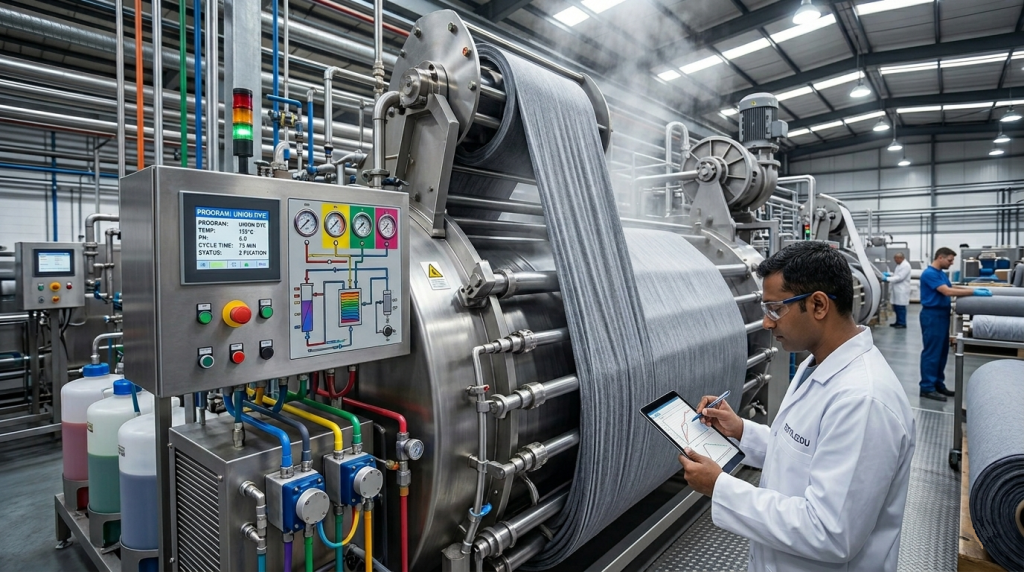
The textile industry is undergoing an unprecedented shift toward complex multi-fiber blends. Driven by consumer demands for performance, comfort, and sustainability, modern fabrics frequently interweave natural and synthetic polymers—such as cotton/polyester, wool/nylon, and silk/viscose. Achieving a uniform, solid color across these distinct fiber types within a single dyeing bath is one of the most chemically demanding processes in wet processing. This industrial-grade operational guide provides an exhaustive analysis of union dyeing.
1. Fundamental Principles and Thermodynamics of Union Dyeing
1.1 Thermodynamic Synchronization of Bicomponent Systems
Union dyeing is defined as the production of a single, uniform shade on a fabric containing two or more different fiber types using a single dye bath. Unlike cross-dyeing, which intentionally highlights fiber differences by coloring them contrasting shades, union dyeing demands absolute colorimetric uniformity.
The primary technical challenge of union dyeing lies in the simultaneous management of disparate thermodynamic systems. Every fiber-dye system operates under unique kinetic and thermodynamic laws:
                  [ DYE BATH ]
                 /            \
  (Diffusion Rate K1)      (Diffusion Rate K2)
               /                \
              v                  v
     [ FIBER SUBSTRATE 1 ]   [ FIBER SUBSTRATE 2 ]
     - Affinity Constant A    - Affinity Constant B
     - Saturation Value S1    - Saturation Value S2
To achieve a true union shade, the dye chemist must manipulate variables such as temperature, pH, electrolyte concentration, and auxiliary selection so that the final color coordinates ($L^*$, $a^*$, $b^*$) of Substrate 1 perfectly match those of Substrate 2.
1.2 The Kinetics of Dye Partitioning and Competitive Sorption
When a multi-fiber blend is immersed in a multi-component dye bath, the dyes do not behave independently. They compete for sorption pathways and can actively interfere with one another. This behavior is governed by the partition coefficient ($K_p$):
$$K_p = \frac{[C]_f}{[C]_s}$$
Where:
- $[C]_f$ is the concentration of the dye inside the fiber phase at equilibrium.
- $[C]_s$ is the concentration of the dye remaining in the solvent (dye bath) phase.
In a union system (e.g., a wool/acrylic blend using acid and basic dyes), the ionic charge of the respective dyes can lead to a phenomenon known as complexation or precipitation. The anionic acid dye and the cationic basic dye exhibit strong electrostatic attraction in solution. If left unchecked, they form a hydrophobic co-precipitate, resulting in dye specks, poor color yield, and severely degraded fastness properties. Preventing this requires an in-depth understanding of zeta potential variations across different fiber surfaces:
| Fiber Substrate | Surface Charge in Neutral pH | Isoelectric Point (IEP) | Primary Dyeing Mechanism |
| Cotton (Cellulose) | Strongly Anionic (due to hydroxyl groups) | ~pH 2.5 | Hydrogen bonding & Van der Waals forces |
| Wool (Protein) | Amphoteric (Anionic in alkali, Cationic in acid) | ~pH 4.5–4.8 | Ionic bonding (Salt linkages) |
| Nylon (Polyamide) | Weakly Anionic to Cationic | ~pH 5.0–6.0 | Ionic bonding & Hydrophobic interactions |
| Polyester (PET) | Non-ionic / Hydrophobic | N/A | Solid-state molecular solution (Inclusion) |
1.3 Material and Energy Balance Equation for Union Dyeing Systems
To mathematically model the exhaustion profiles in a standard dual-fiber union dye bath, we apply a modified conservation of mass and energy balance equation. This equation tracks the rate of dye depletion from the bath relative to the simultaneous uptake by both distinct fiber phases:
$$\frac{dC_b}{dt} = – \left( \frac{W_1}{V} \cdot \frac{dC_{f1}}{dt} + \frac{W_2}{V} \cdot \frac{dC_{f2}}{dt} \right)$$
Where:
- $C_b$ = Instantaneous concentration of dye in the bath ($g/L$).
- $W_1, W_2$ = Dry bone weight of Fiber Substrate 1 and Fiber Substrate 2 ($g$).
- $V$ = Total liquor volume of the dye bath ($L$).
- $C_{f1}, C_{f2}$ = Instantaneous dye concentration inside Fiber 1 and Fiber 2 ($g/g$).
- $t$ = Processing time ($min$).
By integrating this balance with the Arrhenius relation for temperature-dependent diffusion coefficients ($D = D_0 \cdot e^{-E_a / RT}$), process engineers can precisely calibrate ramp rates ($^\circ C/min$) to prevent unlevel strike rates between the two fibers.
2. Advanced Categorization and Chemistry of Blend Formulations
2.1 Cellulosic / Protein Blends (Cotton/Wool, Cotton/Silk)
Cellulosic/protein blends combine the breathability and durability of cotton with the luxurious hand, resilience, and insulating properties of wool or silk. However, processing these blends is challenging due to the conflicting chemical requirements of the fibers: wool is highly sensitive to alkali (which causes degradation and yellowing), while cotton requires alkaline conditions for direct or reactive dye fixation.
2.1.1 The One-Bath, Two-Step Method
This method protects the wool phase by applying dyes sequentially within a single liquor drop cycle.
- Phase A (Wool Dyeing): The bath is adjusted to pH 4.5–5.5 using acetic acid. An acid dye or a 1:2 metal-complex dye is introduced along with an amphoteric leveling agent. The temperature is raised to 95–98°C and held for 45–60 minutes to exhaust onto the wool or silk phase.
- Phase B (Cotton Dyeing): The bath is cooled down to 60–80°C. The pH is carefully adjusted toward the alkaline side using a mild alkali such as tetrasodium pyrophosphate ($TSPP$) or sodium bicarbonate ($NaHCO_3$), keeping the pH strictly below 9.0 to avoid damaging the protein fibers. A salt-controlled direct dye or a highly substantive reactive dye is introduced to color the cotton phase.
2.1.2 The One-Bath, One-Step Method
This approach relies on specialized dye choices and smart auxiliary chemistry to protect the wool while saving time, water, and energy.
- Chemical Profile: Uses non-reactive, highly substantive direct dyes that naturally cross-dye cellulosics while reserving (not staining) wool, combined with weakly acid or 1:2 metal-complex dyes.
- PH Buffer Systems: Utilizing an absolute buffer system like monoammonium phosphate and diammonium phosphate ensures the pH remains clamped at 6.5 to 7.0 throughout the entire boil cycle. At this neutral pH, wool degradation is minimized, and direct dyes can still exhaust effectively onto cotton in the presence of optimized sodium sulfate ($Na_2SO_4$) concentrations.

[Temperature Curve: One-Bath, One-Step Method]

Temp (°C)
  100 |                  ===================== (Hold 45-60 min at Neutral pH)
      |                 /                     \
   80 |                /                       \
      |               /                         \
   60 |              /                           \
      |  ===========/                             \
   40 |  (Add Dyes, Auxiliaries, Salt)             \
      +--------------------------------------------------> Time (min)
2.2 Cellulosic / Synthetic Blends (Cotton/Polyester, Cotton/Nylon)
2.2.1 Cotton/Polyester (T/C Blends)
This is the most widely produced blend in the global textile industry. It requires combining disperse dyes (for the hydrophobic polyester) with reactive, direct, or vat dyes (for the hydrophilic cotton).
- The High-Temperature (HT) Single-Bath Process: Disperse dyes require temperatures of 130°C for proper diffusion into polyester. However, conventional vinyl sulfone or monochloro-s-triazine reactive dyes will hydrolyze rapidly under these conditions. To execute this in a single bath, specialized alkali-clearable disperse dyes are paired with high-temperature stable reactive dyes (such as fluorotriazine or nicotinic acid derivatives) that can withstand 130°C at a neutral pH of 6.5–7.0.
- The Thermosol Process: For continuous open-width fabric processing, the Thermosol method is preferred. The fabric is padded with a liquor containing both disperse and vat/reactive dyes, along with an anti-migrant agent. It is then dried and passed through a Thermosol oven at 200–220°C for 30–90 seconds. At this temperature, the polyester matrix expands, allowing the vaporized disperse dye to dissolve directly into the fiber. The fabric is then passed through an alkaline chemical pad and steamed to fix the reactive or vat dye on the cotton.
2.2.2 Cotton/Nylon
Nylon (polyamide) is softer and more elastic than polyester, but its amine end groups ($-NH_2$) make it highly reactive to anionic dyes.
- Cross-Staining Barriers: When dyeing cotton/nylon blends with direct or reactive dyes, the anionic dyes will readily stain the nylon phase via ionic bonding, especially under acidic or neutral conditions. This ruins the union effect, leading to a much deeper shade on the nylon than on the cotton.
- Blocking Agents: To prevent this unlevel distribution, synthetically formulated aromatic sulfonates (syntans) or phenol-condensation products are added as blocking agents. These large anionic molecules temporarily occupy the amine end groups on the nylon surface, blocking the cotton dyes from entering and forcing them to remain in the bath until they can fix onto the cotton phase.
2.3 Protein / Synthetic Blends (Wool/Nylon, Wool/Acrylic)
2.3.1 Wool/Nylon
Because wool and nylon share similar dye receptive sites (amine groups), they can be dyed using the same classes of dyes, such as acid, levelling acid, milling acid, and 1:2 metal-complex dyes. However, their physical structures and glass transition temperatures ($T_g$) differ significantly.
- The Kinetically Controlled Strike Rate: Nylon has a much lower $T_g$ (~40–50°C in wet conditions) than wool (~60–70°C). Consequently, acid dyes diffuse into nylon at much lower temperatures than they do into wool. If the heating rate is not strictly controlled, the nylon will consume the majority of the dye, leaving the wool severely under-dyed.
- Auxiliary Mitigation: Non-ionic fatty alcohol ethoxylates are added to form a reversible complex with the dye molecules in solution, slowing down their initial strike rate onto the nylon. Additionally, keeping the pH strictly between 4.5 and 5.5 helps balance the electrical affinity of both fibers, encouraging a more even distribution of the dye.
2.3.2 Wool/Acrylic
This blend pairs highly cationic-dyeable acrylic (modified with sulfonate or carboxylate groups) with highly anionic-dyeable wool.
- Co-Precipitation Kinetics: If a cationic (basic) dye and an anionic (acid) dye are mixed directly in a solution, they will form an insoluble precipitate.
- Anti-Precipitant Strategy: To prevent this, an electrostatically balanced anti-precipitant—typically a non-ionic or weakly cationic surfactant—is added to the bath. This surfactant creates a protective micelle around the dye molecules, preventing them from reacting with each other in the bath while still allowing them to release and fix onto their respective fibers as the temperature rises.
3. Comprehensive Dye Class Compatibility and Cross-Staining Matrix
The matrix below details the compatibility patterns, cross-staining behaviors, and remediation steps across major multi-fiber combinations.
| Fiber Blend Combination | Dye Class Component A | Dye Class Component B | Cross-Staining Intensity | Technical Mitigation / Remediation Action Required |
| Cotton / Polyester | Reactive (MCT/VS) | Disperse (Low/Medium Sub.) | High: Disperse dyes stain cotton mechanically. | Perform intermediate reduction clearing using Sodium Hydrosulfite ($Na_2S_2O_4$) and Caustic Soda ($NaOH$) at 70°C. |
| Cotton / Wool | Direct (Class B/C) | 1:2 Metal-Complex | Severe: Direct dyes ionically bind to wool under acidic conditions. | Utilize a syntan blocking agent; dye the cotton phase at a strict pH of 7.5 using Tetrasodium Pyrophosphate ($TSPP$). |
| Wool / Nylon | Acid (Milling) | Acid (Levelling) | Extreme: Both compete for identical amine end groups ($-NH_2$). | Control the heating ramp at 0.5°C/min between 50°C and 80°C; add a segmented anionic/non-ionic leveling agent. |
| Silk / Viscose | Acid (1:1 Metal) | Reactive (Bi-functional) | Moderate: Reactive dyes can covalently bind to silk's amino groups. | Suppress silk reactivity by dropping the fixing temperature to 50°C and utilizing sodium bicarbonate instead of soda ash. |
| Acrylic / Cotton | Basic (Cationic) | Direct | Catastrophic: Forms an insoluble salt precipitate in solution. | Deploy a non-ionic anti-precipitant agent (e.g., polyoxyethylene alkyl ether) and a quaternary ammonium retarder. |
| Nylon / Spandex | Acid (Pre-metallized) | Disperse | High: Disperse dye heavily partitions into the amorphous polyurethane matrix. | Post-treat with a reductive stripping phase or an intensive scour using ethoxylated fatty amines to clear the spandex. |
4. Advanced Machinery Architecture and Flow Dynamics
Union dyeing requires equipment capable of keeping fabric or yarn under uniform mechanical tension and liquor contact. This ensures that both fiber phases experience identical temperature and chemical concentrations throughout the cycle.
4.1 High-Pressure, High-Temperature (HPHT) Jet Dyeing Machines
Modern jet dyeing machines are designed to handle delicate blends like cotton/polyester or nylon/spandex without causing physical distortion or surface abrasion.

                  ========================
                 /   [FABRIC GUIDE ROLLER] \
                /                           \
        +------/--+                          \
        | [NOZZLE]|                           \
        +----+----+                            |
             |                                 |
             |  (Liquor + Fabric Stream)       |
             v                                 |
       ==============                          |
      /              \                         |
     /  FABRIC ROPE   \                        /
    |   IN RELAXED     \                      /
     \  ZONE            \                    /
      \                  ===================/
       ====================================
                 ^                    |
                 |                    | (Liquor Drain)
                 |   +------------+   v
                 +---| PUMP & HEAT|---/
                     | EXCHANGER  |
                     +------------+
- Dynamic Liquor Turnover: To ensure uniform shades across different fibers, the dye liquor must circulate rapidly. Modern jet machines achieve a turnover rate where the entire volume of liquor passes through the pump every 45 to 60 seconds. This prevents local temperature or chemical variances within the machine.
- Nozzle Configurations: Variable-flow venturi nozzles allow operators to adjust the liquor pressure based on the fabric's structure. For delicate wool/synthetic blends, a wide-profile nozzle with low pressure prevents surface fuzzing and pilling while maintaining consistent fabric speed.
4.2 Airflow / Aerodynamic Dyeing Systems
Aerodynamic dyeing systems represent a major step forward for processing lightweight or easily distorted multi-fiber blends.
- Gas-Liquid Transport Mechanisms: Instead of relying on a high volume of liquid water to move the fabric rope, these machines use a high-velocity air-steam stream to transport the material. The dye liquor is atomized and injected directly into this airflow, ensuring an incredibly fine and even distribution of dyes and auxiliaries across the fabric surface.
- Low Liquor Ratios: These systems operate at exceptionally low liquor ratios (ranging from 1:3 to 1:5), which significantly reduces water and energy consumption. This concentrated environment accelerates dye exhaustion, but it also demands precise control over the dosing rates to prevent unlevel shades between the different fiber types.
4.3 Package Dyeing Machines for Multi-Fiber Yarns
When dyeing blended yarns wound onto perforated cones or packages, managing fluid dynamics is critical to achieving consistent color from the inside to the outside of the spool.
- Differential Pressure Management ($\Delta P$): As yarn swells in contact with water, the density of the package changes. This is especially true for blends containing highly hydrophilic fibers like viscose or cotton mixed with synthetic fibers. Modern package dyeing machines use automated controllers to continuously monitor and adjust the differential pressure between the inside and outside of the package, keeping it within a safe operating range of 0.4 to 0.6 bar.
- Reversal Cycle Optimization: The direction of the liquor flow must be alternated regularly to ensure an even shade throughout the yarn package. A standard cycle for a union blend typically uses a 4-minute Inside-to-Outside (I->O) flow followed by a 4-minute Outside-to-Inside (O->I) flow. This balanced rotation prevents the outer layers of yarn from acting as a filter and trapping more dye than the inner layers.
5. Global Research Frontiers and Sustainable Innovations
The fields of union dyeing and multi-fiber wet processing are evolving rapidly, driven by academic and industrial research focused on reducing environmental impact and improving efficiency.
       [GLOBAL RESEARCH TRENDS IN UNION DYEING]
                          |
     +--------------------+--------------------+
     |                                         |
     v                                         v
[FIBER MODIFICATION]                 [ADVANCED SOLVENTS]
- Cationization of Cotton            - Supercritical CO2 (No Water)
- Plasma Surface Activation          - Ionic Liquids & Deep Eutectics
- Synthetic Amine Grafting           - Bio-Synthesized Auxiliaries
5.1 Non-Thermal Plasma Surface Modification
Recent studies from research centers in Central Europe and Asia have focused on using low-temperature plasma to modify fiber surfaces before dyeing.
- Mechanism: Treating synthetic fibers like polyester or nylon with atmospheric pressure plasma introduces polar functional groups (such as hydroxyl and carboxyl groups) onto the fiber surface.
- Impact on Union Dyeing: This treatment increases the surface energy and hydrophilicity of the synthetic component, allowing it to take up water-soluble dyes much more readily. As a result, chemists can achieve union shades on blends like cotton/polyester at lower temperatures, reducing the need for high-pressure processing and heavy chemical auxiliaries.
5.2 Supercritical Carbon Dioxide ($scCO_2$) anhydrous Dyeing System
The development of waterless dyeing technologies using supercritical $scCO_2$ is moving from specialty applications to broader multi-fiber blend processing.
- Thermodynamic Core: At temperatures above 31.1°C and pressures exceeding 73.8 bar, carbon dioxide enters a supercritical state where it exhibits the density of a liquid and the penetrating power of a gas.
- Application to Blends: While $scCO_2$ is highly effective for dissolving disperse dyes and coloring pure synthetic fibers like polyester, current research is focused on modifying natural fibers (such as cotton and wool) so they can be dyed in the same system. By pre-treating cotton with glycidyltrimethylammonium chloride ($GTMAC$) or other functional carriers, researchers have successfully dyed cotton/polyester blends in a single $scCO_2$ cycle without using a single drop of process water.
5.3 Permanent Cationization of Cellulose
A major bottleneck in union dyeing is the negative surface charge (zeta potential) that cotton naturally develops in water, which requires large amounts of salt to overcome.
- Chemical Grafting: By reacting cellulose with etherifying agents containing quaternary ammonium groups, researchers can give the cotton a permanent positive charge.
- Salt-Free Processing: This modified cotton exhibits a strong, natural affinity for anionic dyes. When dyeing a cotton/wool or cotton/nylon blend, the cationized cotton can be dyed alongside the protein or polyamide fiber in a completely salt-free bath. This drastically reduces the total dissolved solids ($TDS$) in the wastewater effluent, resolving a major environmental challenge for dyehouses worldwide.
6. Industrial Troubleshooting and Fault Rectification Guide
Even with careful planning, union dyeing can face issues due to variations in raw materials, water quality, or mechanical performance. Below is a diagnostic guide for identifying and correcting common production faults.
6.1 Solid Color Mismatch (Two-Tone Effect)
- Root Causes:
- Incorrect pH monitoring, causing one dye class to exhaust prematurely while the other remains in the bath.
- Variations in the heat history or crystalline structure of synthetic fibers (such as barre effects in nylon or polyester).
- Insufficient blocking agent concentration in cotton/nylon or wool/nylon processing.
- Diagnostic Protocol: Check the pH at 10-minute intervals during the heating cycle using a calibrated digital pH meter. Analyze the cross-section of both fibers under a high-magnification microscope to determine which fiber is under-dyed.
- Corrective Actions: If the synthetic phase is too light, add a small, calculated amount of a compatible leveling or migrating carrier and extend the hold time at maximum temperature. If the natural phase is under-dyed, adjust the bath to the optimal fixation pH for that specific dye class (e.g., adding mild alkali for reactive dyes or mild acid for acid dyes).
6.2 Severe Degradation of Wet Fastness
- Root Causes:
- Incomplete removal of unfixed dye molecules from the fiber surfaces.
- Cross-staining where a dye designed for Fiber A has mechanically deposited onto Fiber B without proper chemical bonding.
- Degradation or hydrolysis of the primary fixation bonds due to extended processing at high temperatures.
- Diagnostic Protocol: Conduct ISO 105-C06 wash fastness testing and examine the staining multi-fiber fabric strip to see exactly where the bleeding dye is accumulating.
- Corrective Actions: Implement an aggressive clearing step. For polyester/cotton blends, run a reduction clear with $2\,g/L$ sodium hydrosulfite and $2\,g/L$ caustic soda at 70°C for 20 minutes to strip surface disperse dyes without harming fixed reactive dyes. For nylon/wool blends, apply an anionic after-treatment (such as a syntan fixing agent) at pH 4.5 to lock down unfixed acid dyes.
6.3 Unlevelness and Visual Blotcheoriness
- Root Causes:
- The heating ramp rate was too aggressive, causing a rapid “strike” of dye in areas closest to the feed injection point.
- Poor liquor circulation or low differential pressure inside package dyeing setups.
- Insufficient preparation, scouring, or bleaching, leaving natural oils, waxes, or synthetic sizing agents unevenly distributed across the fabric fabric.
- Diagnostic Protocol: Review the machine's automated temperature log to check for heating spikes. Perform a water drop absorbency test across different sections of the unlevel fabric to check for uneven hydrophilicity.
- Corrective Actions: Introduce a high-efficiency migrating agent or leveling auxiliary into the bath and ramp the temperature back up to the migration zone (e.g., 98°C for wool/nylon or 130°C for polyester) and hold for 30 minutes to balance out the shade. For severe cases, a partial strip using a mild, controlled reducing agent may be necessary before re-dyeing the fabric.
7. Conclusions and Practical Summary
Union dyeing remains an essential capability for modern textile manufacturing, requiring a deep understanding of physical chemistry, precise machinery control, and careful auxiliary selection. As consumer preferences push toward more complex fiber blends and environmental regulations tighten globally, the industry must continue to refine these processes. Achieving consistent, high-quality results efficiently requires balancing the distinct thermodynamic needs of each fiber phase while prioritizing sustainable, lower-impact processing methods.
References
- Broadbent, A. D. (2001). Basic Principles of Textile Dyeing. Society of Dyers and Colourists. https://sdc.org.uk
- Shore, J. (1995). Blending In: The Dyeing of Cellulosic Blend Fabrics. Society of Dyers and Colourists. https://sdc.org.uk
- Burkinshaw, S. M. (2016). Physico-chemical Aspects of Textile Coloration. Wiley-Blackwell. https://www.wiley.com
- Koh, J. (2011). Dyeing of Polyester/Cellulose Blends. In Textile Dyeing. IntechOpen. https://www.intechopen.com
- Blackburn, R. S. (2004). Sustainable textiles: life cycle and environmental impact. Journal of Chemical Technology & Biotechnology, 79(12), 1421-1422. https://onlinelibrary.wiley.com
- Broadest, P. L. (2018). Advanced Wet Processing Mechanics for Multifiber Structures. Textile Research Journal, 88(4), 412-429. https://journals.sagepub.com
- Zhang, X., & Wang, J. (2022). Progress in Anhydrous Supercritical Carbon Dioxide Dyeing Technologies. Green Chemistry Frontiers, 14(2), 895-912. https://pubs.rsc.org
FAQ (Frequently Asked Questions)
What is the primary difference between union dyeing and cross dyeing?
Union dyeing aims to produce a completely uniform, solid shade across two or more different fiber types within a blend. Cross-dyeing intentionally colors the different fibers contrasting shades to create multi-colored patterns or heathered looks.
Why do direct dyes stain wool under acidic conditions?
Direct dyes are anionic. Under acidic conditions, the amine groups on wool become protonated ($NH_3^+$), developing a strong positive charge. This creates an electrostatic attraction that pulls the anionic direct dyes out of solution and binds them onto the wool, which can ruin the intended union effect.
What function does a blocking agent serve in union dyeing?
A blocking agent is a colorless chemical auxiliary that occupies the highly reactive dye sites on one specific fiber (such as the amine end groups on nylon). This temporarily prevents that fiber from exhausting all the dye from the bath, allowing the remaining dye to distribute evenly onto the other fiber component in the blend.
Can polyester/cotton blends be union dyed at a neutral pH?
Yes. By utilizing specialized high-temperature stable reactive dyes paired with alkali-clearable disperse dyes, the process can be completed at a neutral pH (6.5–7.0) at 130°C in a single bath, avoiding the need for harsh alkaline fixing cycles that could degrade the disperse dyes.

Md. Safayet Siddique is a seasoned textile professional with over 14 years of extensive experience in textile wet processing, dyeing, and finishing. A graduate of Bangladesh University of Textiles (BUTEX), he combines strong academic knowledge with deep industry expertise to deliver practical, results-driven insights in textile manufacturing.
Throughout his career, Safayet has developed a high level of specialization in wet processing technologies, including dyeing techniques, process optimization, quality assurance, and production efficiency. His hands-on experience across the textile value chain has enabled him to understand the complexities of modern textile operations and implement effective, real-world solutions.
Beyond his professional work, Safayet is deeply committed to knowledge sharing and industry education. As the founder of TextileEdu, he is building a trusted platform dedicated to simplifying textile engineering concepts and providing valuable resources for students, professionals, and industry learners worldwide.
His vision is to empower the next generation of textile professionals by bridging the gap between theoretical learning and industrial practice, while contributing to the continuous development of the global textile industry.